Index
A-Z
Sauerkraut - how to make your own
Vegetables
Ingredients
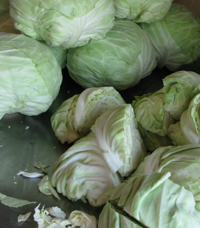
- White cabbage, firm heads
- Salt, 1 g/ 100 g cut cabbage
You will also need:
- A suitable container with a lid that fits snugly inside the container (traditionally an earthenware pot is used)
- A clean, boiled linen bag
- Clean bricks/stones as weights
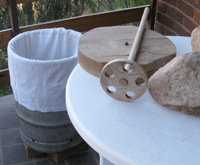
Clean all equiment well before use.
Method
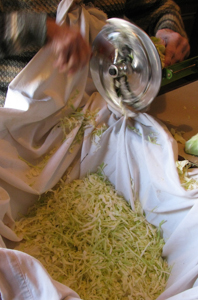
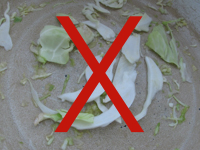

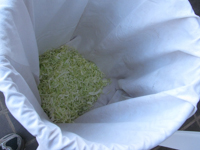
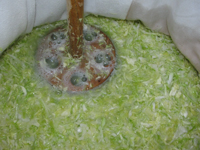
Remove the outer cabbage leaves, quarter and cut out the core. Cut cabbage into thin slices - about 1-3 mm thick shreds.
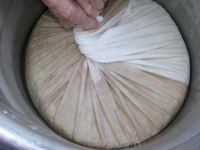
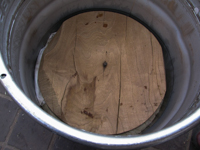

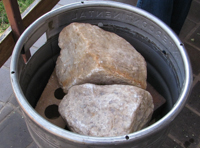
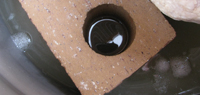
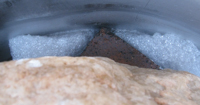
Cover with the wooden lid ...
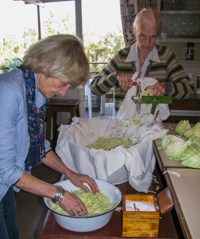
My sister Elsa and my mother.
The Fermentation Process
The cabbage leaves are broken while kneading in the salt and during the packing into the pot; this enables the salt to draw out the juice from the cabbage leaves.
The naturally occurring lactic acid microbes in the cabbage consume the plant sugars and form lactic acid and carbon dioxide. The lactic acid makes the cabbage sour and preserves it.
It is important to limit the amount of air in the fresh cabbage leaves; that is why the cabbage is pressed, firmly closed in the linen bag and the lid weighed down with heavy stones.
The fermentation temperature should be between 18° and 24°C.
Salt: 1-2%, acidity: 1-1.5%.
Sauerkraut is low in calories and high in vitamin C.

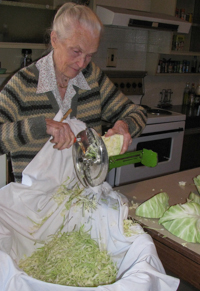
My mother shredding cabbage.
Instructions from my mother, Irene Behrens.